
Approximately 1.3 million Indian soldiers (from the pre-partition Indian subcontinent) served as soldiers in World War One, with over 74,000 losing their lives over the course of this 4 year war. Indian soldiers fought in all theatres of war, from the muddy trenches of the Western Front to the clifftops of Gallipoli. Indian troops also served in all areas of the armed forces, from pilots like India’s first ‘flying ace,’ Indra Lal Roy to Gabar Singh Negi, who won the prestigious Victoria Cross for his bravery and ultimate sacrifice at the Battle of Neuve Chapelle.
There were approximately 2.5 million Indian soldiers who served during World War Two, with over 90,000 from the largest volunteer army in the world sadly losing their lives. Indian soldiers were involved in all the key turning points of this war, from the D Day landings to the Battle of Monte Cassino. Indians were also in the skies, like pilot Mohinder Singh Pujji, best known for insisting on flying with modified headgear so he could still wear his turban. He served as a pilot in three major theatre of war in France, North Africa and Burma, providing a stark reminder of how truly global this war was. After VE Day Indian soldiers played a vital role in continuing the allied fight in Asia, although their sacrifices here are often left unacknowledged, reflected in their nickname of the 14th ‘forgotten army.’
Indians contributed in numerous other ways to the war effort in both wars in the form of money, food and with their time. Indian women both in Britain and India contributed hugely during both conflicts. During World War One Princess Sophia Duleep Singh campaigned tirelessly to raise funds for Indian soldiers and she also volunteered as a Red Cross nurse. During World War Two, just like in Britain, the home front in India was fully geared towards the war. Indian women were drafted into auxiliary corps organisations such as Second Officer Kalyani Sen who joined the Women’s Royal Indian Naval Service (WRINs) These women did very similar jobs to the WRNs in Britain, including clerical duties, decoding and military maintenance.
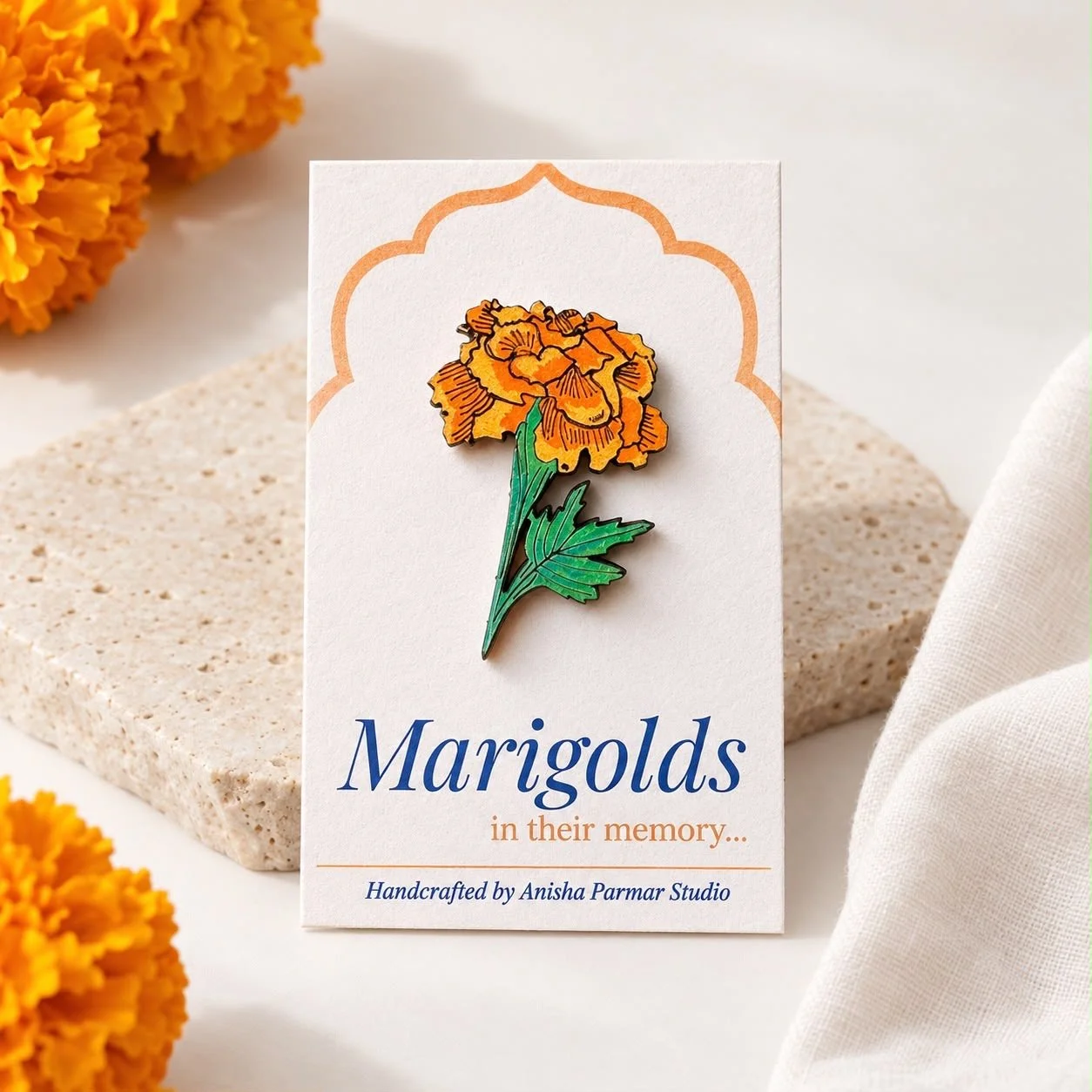
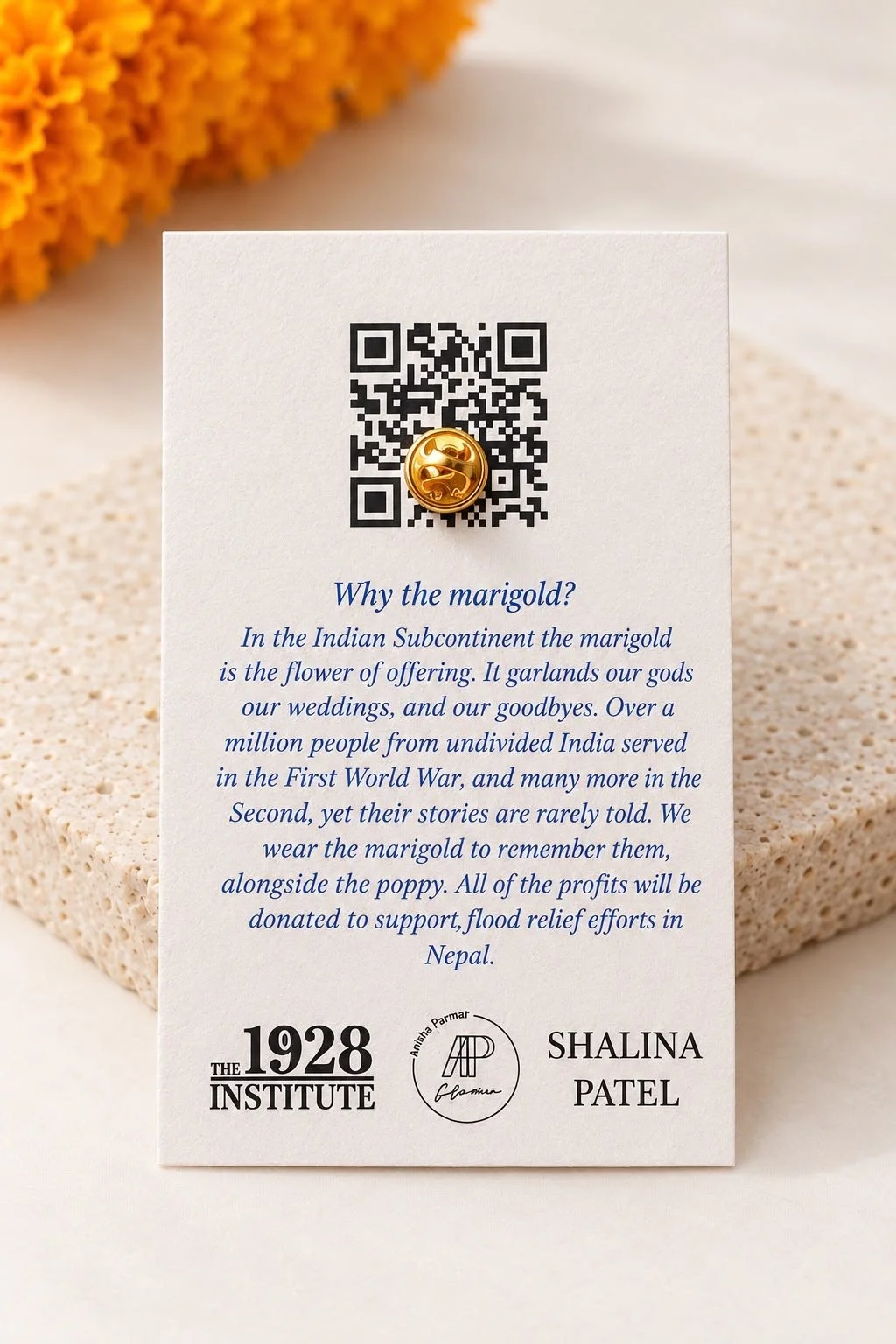
For every story mentioned here, there are millions of others who could have been. This is why we have created this marigold pin – so that their stories and sacrifice can be acknowledged and commemorated.